Wednesday, March 21, 2012
At PSU we know how to Party
This American Life's look at the party scene here at Penn State I thought was fairly accurate and I actually thought they didn't even make us look bad. Sure we are a party school..... every school is a party school we just have more people. More people = more parties. Sure there are a few people who can't handle themselves around alcohol but they make the rest of us look bad by doing dumb things. But the majority know their limits and don't cause problems. People concerned with the "image" this gives PSU don't make sense to me. We are considered a top academic institute and we have awesome parties compared to somewhere like Arizona State which everything I've heard about them is referencing their parties. (No offense I'm sure you have excellent academics) I'm just saying everyone has flaws just embrace our school as is the good, the bad and the ugly. Personally I'm not a big party person. The frats are straight up disgusting (again no offense) and I just get a bad vibe from them. The apartment parties I've been to are always super crowded so I'd much rather hangout with my friends in smaller groups. I actually prefer to walk around downtown just talking to hammered people while I'm sober. There is no end to the entertainment of the inebriated. The podcast was fair and showed both the students and the locals views. We don't need to redefine who we are as a university we are a top party school, top academic school, and a top athletic school. We don't need others to define who we are. WE ARE PENN STATE!

Monday, March 19, 2012
You call that art?
What art is can be a tricky subject as it's up to the individual to decide how they feel about something others may call art. To me art is a interesting or beautiful.....thing. Really anything can be considered art but I consider art to be something that usually doesn't have a functional purpose other than to possibly voice an opinion/ view.
Art is something that you can appreciate just for its sheer beauty and mystery. http://www.philipcoppens.com/easterisle.html The heads found on Easter island have such mystery surrounding them and lets "face" it these things look awesome. (sorry about the pun) These sculptures make me want to visit the island for the sole purpose of seeing them. To me they represent the unknown and a lost people. I'm really love history and it just peaks my interest. I want to know more about the people who seem to have made these beautiful heads fanatically.
Similarly, the architecture found on the churches of St. Petersburg, Russia are breath taking. http://www.europeupclose.com/article/exploring-the-churches-of-st-petersburg-russia/#.T2eDYdl2SSo (I know its a travel site but it nicely shows the churches) They are just different, you rarely if ever see churches like these anywhere else and they definitely don't look this good. Between the colors and the "domes" I don't even know which part is my favorite. I don't really know why I love these churches so much but for as long as I can remember I've wanted to go see them.
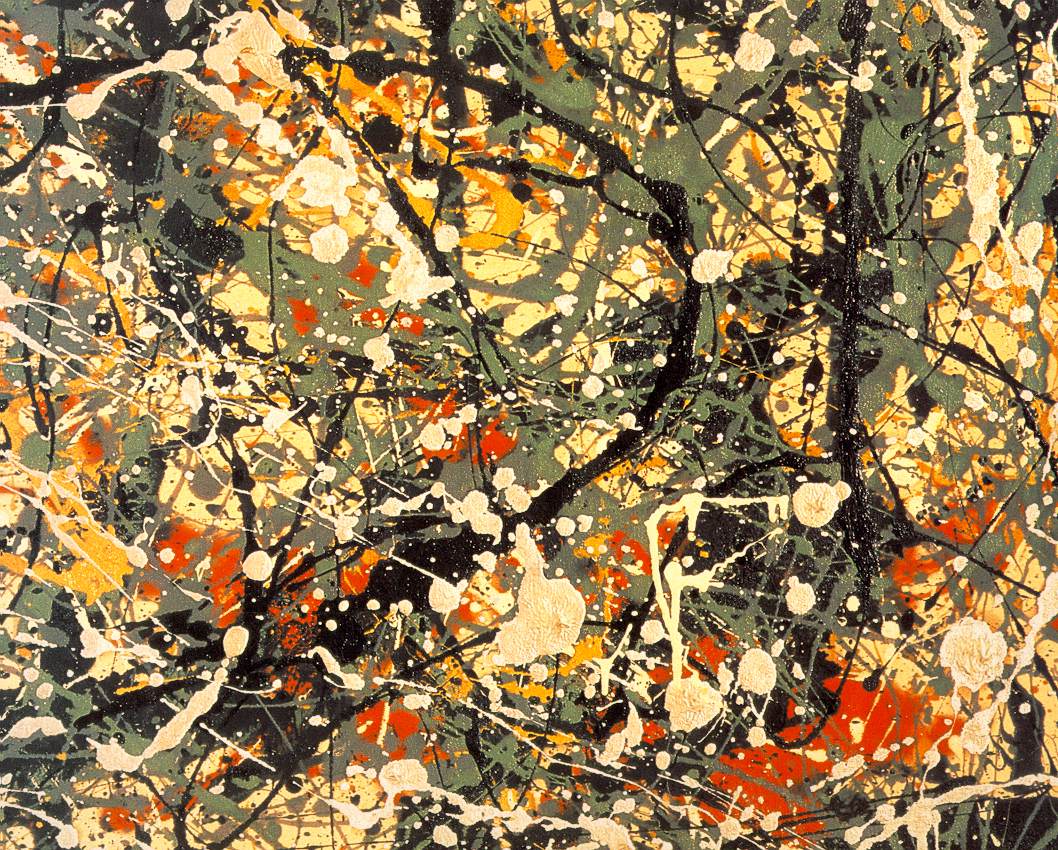
Oddly enough paintings don't really do it for me. I know they are art and a lot of them are very impressive but when things like http://www.ibiblio.org/wm/paint/auth/pollock/pollock.number-8.jpg are considered art I just don't agree. Sure it looks cool but I don't get it. It looks like a mess to me but to each his/ her own. Something by say Rembrandt I would consider art but that's because it's just so much more impressive. I guess for me art is a combination of Mystery, Beauty, and the Skill/ Difficulty needed. When your "art" looks like a kindergartener could have done it.... to me that's not art.
Art is something that you can appreciate just for its sheer beauty and mystery. http://www.philipcoppens.com/easterisle.html The heads found on Easter island have such mystery surrounding them and lets "face" it these things look awesome. (sorry about the pun) These sculptures make me want to visit the island for the sole purpose of seeing them. To me they represent the unknown and a lost people. I'm really love history and it just peaks my interest. I want to know more about the people who seem to have made these beautiful heads fanatically.
Similarly, the architecture found on the churches of St. Petersburg, Russia are breath taking. http://www.europeupclose.com/article/exploring-the-churches-of-st-petersburg-russia/#.T2eDYdl2SSo (I know its a travel site but it nicely shows the churches) They are just different, you rarely if ever see churches like these anywhere else and they definitely don't look this good. Between the colors and the "domes" I don't even know which part is my favorite. I don't really know why I love these churches so much but for as long as I can remember I've wanted to go see them.
Oddly enough paintings don't really do it for me. I know they are art and a lot of them are very impressive but when things like http://www.ibiblio.org/wm/paint/auth/pollock/pollock.number-8.jpg are considered art I just don't agree. Sure it looks cool but I don't get it. It looks like a mess to me but to each his/ her own. Something by say Rembrandt I would consider art but that's because it's just so much more impressive. I guess for me art is a combination of Mystery, Beauty, and the Skill/ Difficulty needed. When your "art" looks like a kindergartener could have done it.... to me that's not art.
Thursday, March 1, 2012
The Palmer
Growing up in town, I’ve made
numerous trips to the Palmer. Whether it was on a field trip or something my
family wanted to do on a rainy day, I
found myself walking these halls every year or so from elementary school until
the end of middle school. Walking these vaguely familiar halls brought back
some fond memories for me. This visit was once again a pleasant experience as
the Palmer is like many other museums but with one huge advantage….. less
crowds. Maybe it’s just my experiences with museums but they always seem to
have so many people but not the Palmer, you can just enjoy the art without
being jostled constantly.
Having
been at the Palmer so many times I had some difficulty deciding on an
interesting piece to write about. The obviously interesting pieces I remembered
so they seemed less interesting to me while many others seemed quite mundane….
a earthenware jar without any distinct
characteristics, so exciting. Ultimately I settled on a painting done by Robert
Salmon titled The Lowlight, Moonlight
from 1828. This painting had a foreboding yet hopeful vibe to it upon my first
glance. The sun is about to set on the right, shining into the bay, flanked by
the edge of a moored ship to the far right and a light house preparing for
night in the center of the piece. The light house serves as a divider from the
light hopeful right and the dark foreboding left. To the left of the light
house was town consisting almost exclusively of what appears to be factories.
The dark clouds seem to be rolling away from the right to the left. The bottom
edge of the painting depicts a boy and a man in a top hat on the shore holding
a mooring line for the ship at the right edge of the piece. Beside them on the
far left of the beach is an obviously damaged ship (broken masts and missing
sections of railing) being repaired.
The
painting is making a statement about the industrial revolution. The darkness
represents the era before industrialization, a sort of “dark age.” While the
right shows hope for the future while at the same time commenting with the
setting sun that this era will too draw to close perhaps later than the artist
realized. The broken ship is speaking to how the past appears with the new
ideas and inventions of the early 19th century.
The
artist, Robert Salmon, was a British painter who immigrated to the United
States in the late 1820’s who painted mostly maritime scenes. But his life span
stretched almost the entire length of the industrial revolution and growing up
in England (where the revolution began) would have given him a unique perspective
of the era giving him more credibility than someone trying to depict that time
today.
I once
again enjoyed my visit to the Palmer and will be going back at some point so I
can take my time instead of looking for a piece to write about. I love museums
and the Palmer is one of my favorites and despite its limited collection has a
surprising range of items.
Subscribe to:
Comments (Atom)